
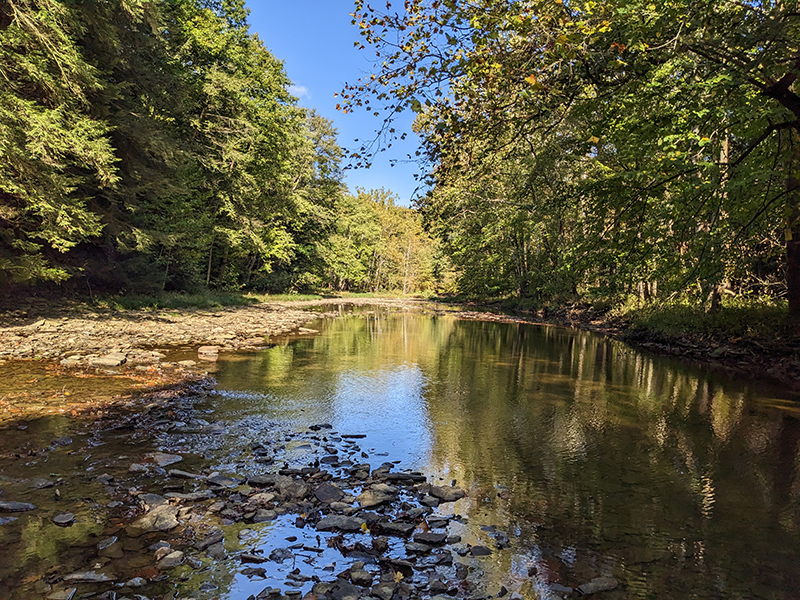
The Ashtabula River | Photo: Western Reserve Land Conservancy
Ashtabula River Preserve Extension
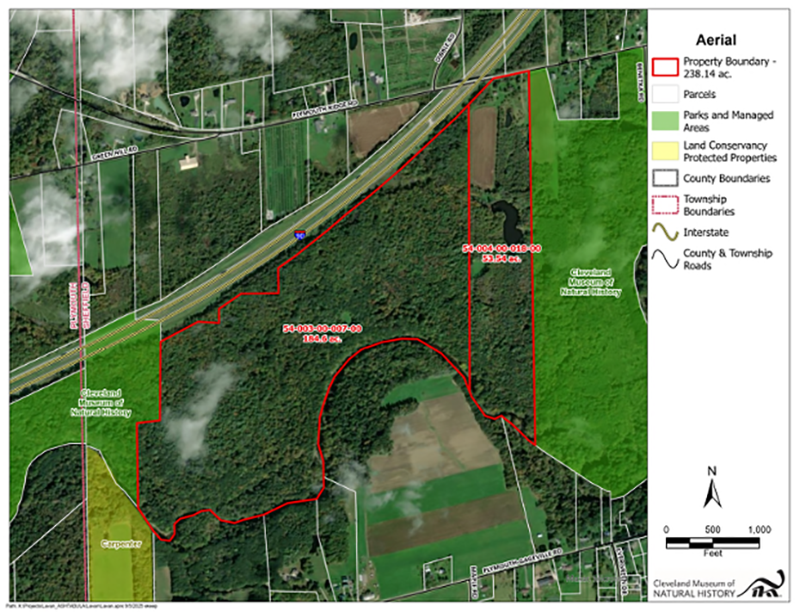
In collaboration with the Cleveland Museum of Natural History, Western Reserve Land Conservancy is acquiring and conserving a critical 238-acre property in  Sheffield Township, Ashtabula County: the Ashtabula River Preserve Extension.
This largely forested land safeguards approximately 6,300 linear feet of the Ashtabula River, which holds a State Scenic Designation. The property’s intact forest plays a vital role in maintaining the river’s health by providing shade for temperature regulation, preventing erosion, retaining nutrients, and enhancing groundwater filtration. Preserving this forest in perpetuity will help ensure the river’s long-term quality.
The property is strategically located between two protected areas — 129 acres to the east and 153 acres to the west — that are owned by the Cleveland Museum of Natural History. The property is also adjacent to 131 acres of privately held conservation easements to the south held by the Land Conservancy. Western Reserve Land Conservancy is managing the project and its associated real estate, fundraising, legal work, and stewardship, and intends to transfer the property to the Cleveland Museum of Natural History at the project’s conclusion so the Museum may serve as its long-term owner. Once acquired, the property will contribute to a total of 650 contiguous protected acres along the Ashtabula River, covering approximately 17,500 linear feet of its course.
The 238-acre property is divided by four hemlock ravines, which drop in steep slopes about 100 feet to the Ashtabula River. A survey of the river noted the presence of Northern Brook Lamprey on the property. Upland forest areas consist of red and sugar maples, with tuliptree also common. Ravine walls are forested with mature eastern hemlock, black oak, sugar maple, and black cherry. Hemlock ravine is a rare habitat in northeastern Ohio, which adds to the importance of conserving this property. Understory species include Canada mayflower, hairy Solomon’s seal, tall rattlesnake root, wild sarsaparilla, giant blue cohosh, mayapple, heart-leaved aster, blue-stemmed goldenrod, and more. Spinulose woodfern, Christmas fern, lady fern, New York fern, and sensitive fern are also present.
The site also contains eight wetland areas, five of which scored as Category 3 wetlands – indicating they are Ohio’s highest quality due to high species diversity, high proportions of native species, and high functionality. Prominent species include tupelo, spicebush, skunk cabbage, swamp aster, boneset, black willow, lizard’s tail, and white grass.
Naturalists have also observed northern two-lined salamanders and Allegheny Mountain dusky salamanders in the wetlands, as well as many species of dragonflies and damselflies, including Rapids Clubtail. Acoustic surveys documented numerous bat species of concern, as well as the endangered Silver-haired Bat. At least 41 bird species have also been observed on the property, including Ohio Species of Special Interest: magnolia warbler, red breasted nuthatch, golden-crowned kinglet, dark-eyed junco, and purple finch, as well as Species of Concern, bobolink.
Protection of this property, with its hemlock ravines, high-quality floodplain and other wetlands, and its extensive frontage on the Ashtabula River, is critically important in the preservation of scenic river quality and wildlife habitat. The property will complement the surrounding assets and be used to support public access to the Ashtabula River and its banks for fishing, hiking, and paddling. It will be accessible through a parking area located on the Museum’s Stanton Preserve, which is also home to a 138-foot historic covered bridge. Western Reserve Land Conservancy’s Conservation Education and Outreach program may also use the Ashtabula River Preserve conservation block for ongoing nature-based education and limited access opportunities for area residents and others engaged in our diverse mix of outdoor programs.
- Total Transaction Cost: $1,584,878
- Atira Conservation Support: $17,000
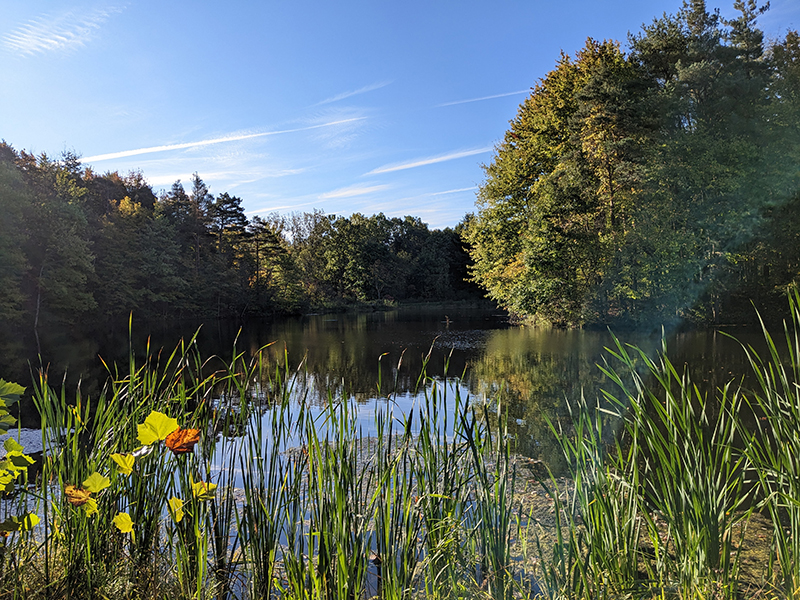
South-facing pond on the Ashtabula River Preserve Extension | Photo: Western Reserve Land Conservancy