Muddy Moose Forest Conservation Project
The Muddy Moose Forest conservation project is a rare and highly strategic opportunity to protect biodiversity, safeguard critical habitat, and strengthen natural flood resilience along one of northern Vermont’s most ecologically significant river systems.
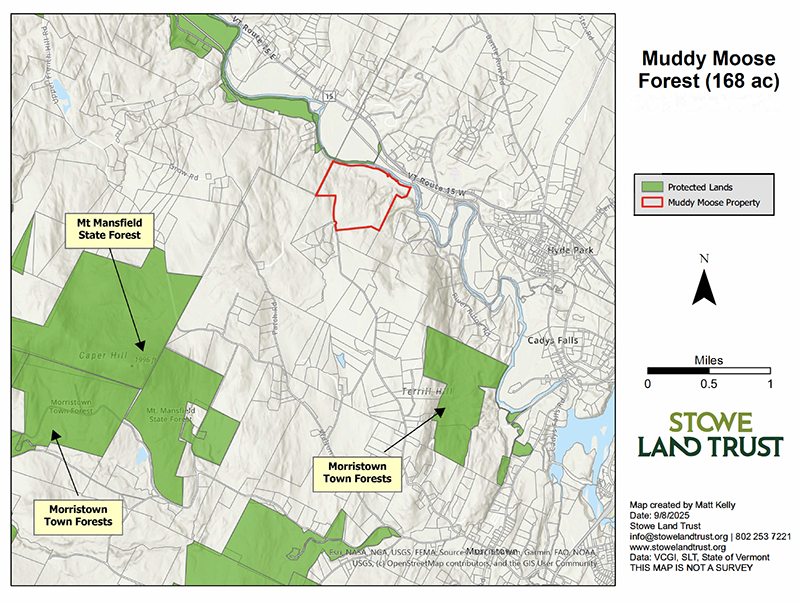
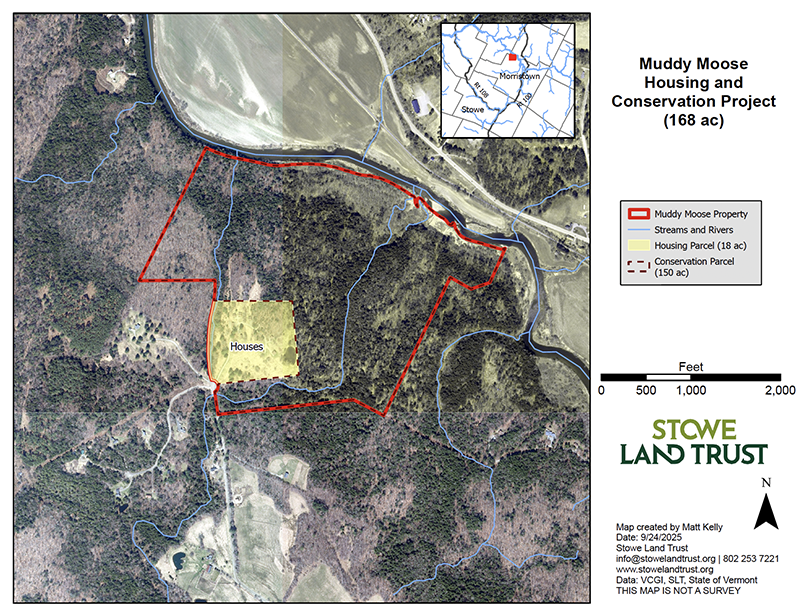
Spanning approximately 168 acres in Morristown, Vermont, the landscape includes extensive riverfront, intact forest blocks, and floodplain ecosystems that together support high levels of ecological integrity. Stowe Land Trust and Downstreet Housing & Community Development partnered to permanently conserve roughly 150 acres of the property, ensuring long-term protection of these natural resources. The adjacent parcel includes houses that have been converted into community housing.
A Landscape Defined by Water and Connectivity
At the core of the property’s ecological value is its extensive water network. The parcel includes approximately three-quarters of a mile of frontage along the Lamoille River, as well as nearly three-quarters of a mile along Jacob’s Creek, a tributary that flows through the property before joining the river. These riparian corridors are identified by the State of Vermont as highest-priority surface water and riparian conservation areas, reflecting their exceptional importance for:
- Water quality protection
- Aquatic habitat health
- Floodwater storage and conveyance
- Wildlife movement corridors
The convergence of river and tributary creates a dynamic and productive ecological zone that supports a wide array of plant and animal species, particularly those dependent on intact shoreline and floodplain habitats.
Floodplain Forests and Climate Resilience
A defining feature of the Muddy Moose parcel is its intact floodplain forest system, which plays a critical role in mitigating flood impacts and supporting climate resilience. Floodplain forests function as natural infrastructure by:
- Slowing and dispersing floodwaters
- Allowing water to infiltrate soils and recharge groundwater
- Stabilizing riverbanks and reducing erosion
- Capturing sediments and improving downstream water quality
These functions are especially important along the Lamoille River, where increasingly frequent and intense storm events have elevated flood risks throughout the watershed.
In addition, the property lies within a high-value climate connectivity corridor, as identified by The Nature Conservancy. This designation indicates that the land provides essential pathways for wildlife to move across the landscape in response to changing temperatures, seasonal shifts, and extreme weather events. Its conservation ensures that species retain the ability to adapt and persist over time.
Interior Forest and Habitat Integrity
Beyond its waterways, the Muddy Moose Forest contains large, contiguous interior forest blocks, a habitat type that is increasingly scarce due to fragmentation. Interior forests are essential for:
- Area-sensitive wildlife species
- Forest breeding birds that avoid edge habitats and require large, unfragmented forest blocks
- Maintaining ecological processes such as nutrient cycling and forest succession
The size and continuity of these forest blocks strengthen their role as a biodiversity stronghold, supporting complex ecological communities and enhancing resilience to environmental stressors.
Riparian and Shoreline Habitat Protection
The property’s extensive shoreline — along both the Lamoille River and Jacob’s Creek — provides especially valuable habitat. Of particular importance is the presence of sandy shoreline areas, including a known wood turtle nesting beach. These sunlit sandy and gravelly areas are critical for successful nesting by wood turtles, a species of conservation concern in Vermont. Protected shoreline habitat provides multiple ecological benefits:
- Preserves critical nesting and breeding areas for riparian songbirds that depend on intact floodplain forest habitat
- Maintains natural river dynamics and sediment processes
- Supports amphibians, reptiles, fish, and aquatic invertebrates
- Enhances ecological function at the land–water interface
- Promotes native floodplain plant communities – stabilize riverbanks and thrive under periodic flooding
Because such habitats are highly vulnerable to disturbance and development, their conservation ensures sustained ecological function.
Preventing Fragmentation and Ensuring Permanence
At the time of acquisition, the property faced a real risk of subdivision and development, which would have caused fragmentation of forests and disruption of wildlife corridors. By protecting this parcel, the project:
- Prevented subdivision and habitat fragmentation
- Maintains connectivity between forest, river, and upland systems
- Protects ecological processes at a landscape scale
This permanent protection ensures that the land continues to function as an integrated ecological system rather than becoming a fragmented landscape.
A Lasting Conservation Outcome
The successful conservation of the Muddy Moose Forest has secured lasting ecological benefits for the Lamoille River watershed and surrounding region. The project:
- Protects a high-value river corridor and associated tributary system
- Conserves floodplain forests that reduce downstream flood impacts
- Maintains essential wildlife habitat and climate migration pathways
- Preserves rare shoreline environments, including wood turtle nesting habitat
In doing so, it safeguards a landscape where river systems, forests, and wildlife connectivity converge, making it disproportionately valuable for biodiversity conservation and climate resilience.
- Total Transaction Cost: $1,800,525
- Atira Conservation Support: $15,000
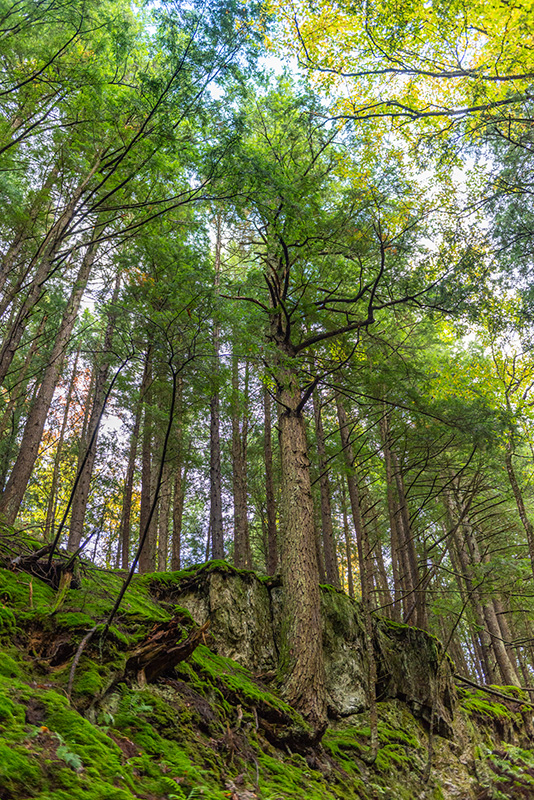
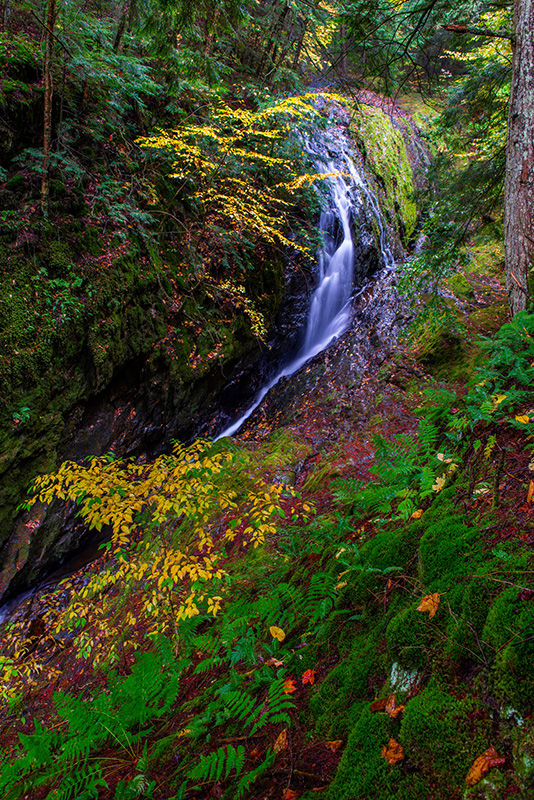
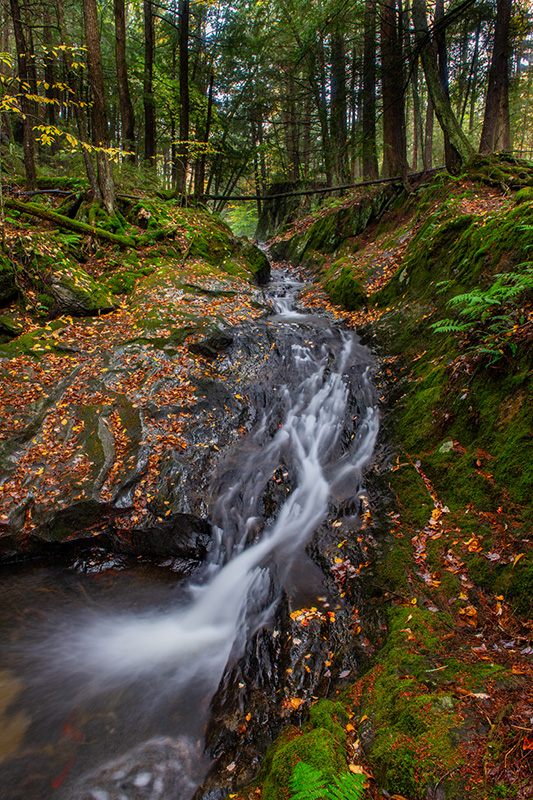
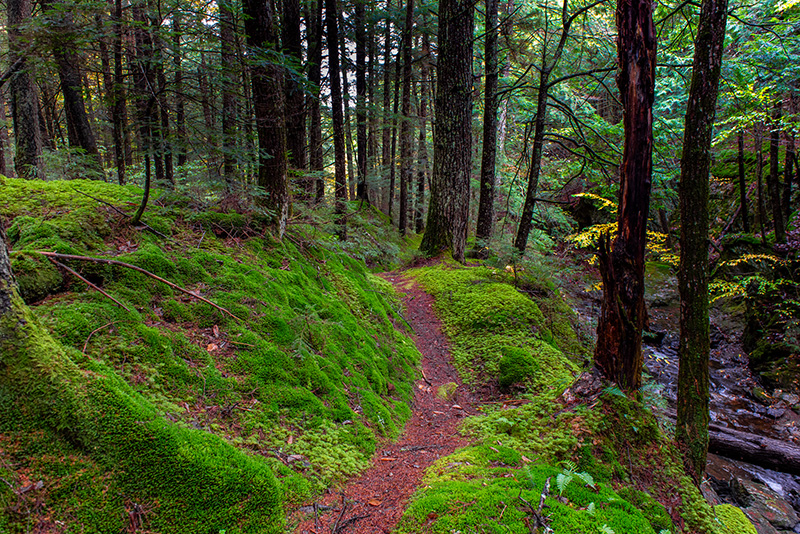
Photos of Muddy Moose Forest | By Tom Rogers