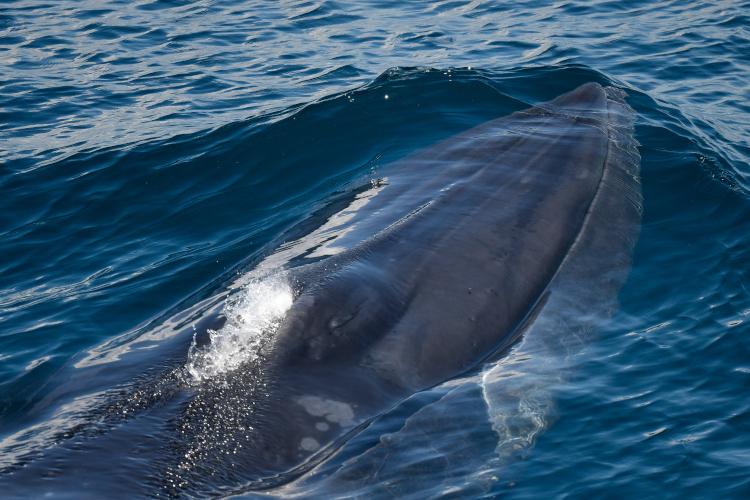
A Rice’s whale photographed using a drone|Photo courtesy of NOAA Fisheries/Ocean Alliance.
Photo taken under MMPA/NMFS Scientific Research Permit No. 21938.
Lately we have been hearing a lot about a group called the “God Squad.” For many of us, this is our first time hearing about this entity that has recently made the news. That makes sense since the last time the God Squad gathered was in 1992. But they’ve actually been around a long time.
The formal name for the God Squad is the Endangered Species Committee (Committee). This Committee was created in 1978 as part of an amendment to the Endangered Species Act (ESA) implemented in 1973. The Committee was established to address cases where federal actions deemed critical for national security or economic interests could also threaten species listed as threatened or endangered under the protections offered through the ESA. The Committee was dubbed the “God Squad” due the authority it held in deciding the fate of federally listed species. Simply put, the Committee could authorize a project to proceed on the grounds of national security or economic threats, even if the project would impact the last remaining wild population of a particular species.
The Committee was designed to only convene when a federal action is likely to jeopardize the survival of a species and no reasonable alternatives exist. Since its inception, the Committee has only met three times. The first meeting occurred in 1978, when the Committee unanimously granted an exemption for the construction of the Grayrocks Dam and Reservoir on the Platte River in Wyoming. The project was reviewed because the site was a significant stop-over location for migrating whooping cranes (federally listed as endangered species under the ESA).
The Committee met again in 1979, when it denied an exemption request for the Tellico Dam on the Tennessee River. The dam had the potential harm to endangered snail darter fish.
The last time the Committee convened was in 1992, when it approved an exemption for the Bureau of Land Management to allow timber sales of an old growth forest in Oregon where threatened northern spotted owls were known to live.
Six permanent members make up the Committee, including the Secretaries of the Interior, Agriculture and the Army, the Chairman of the Council of Economic Advisors and the Administrators of the Environmental Protection Agency and the National Oceanic and Atmospheric Administration. One additional member is appointed by the President from the state affected by the exemption application. A quorum requires at least five members present, while an exemption can only pass when five of the permanent members have voted in its favor.
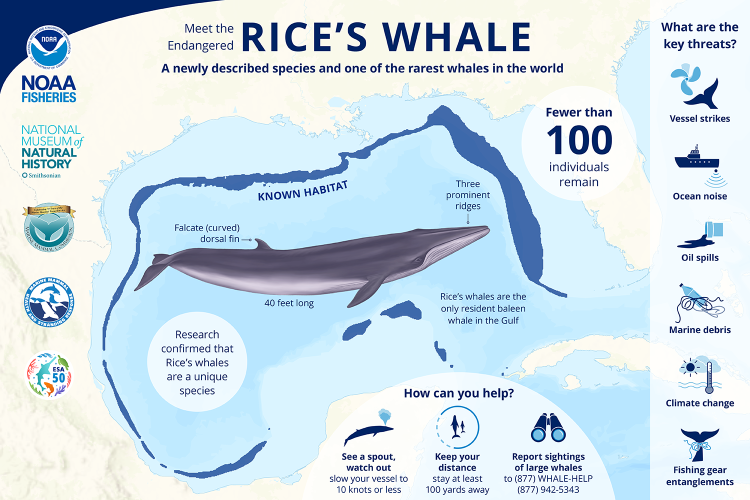
In March 2026, the Trump administration convened the Committee for the first time in more than three decades to address an exemption for oil and gas activities in the Gulf of Mexico. Citing national security concerns related to global oil supply disruptions. The Committee has now approved the administration’s exemption request, essentially waiving ESA protections for 20 federally listed species that live in the Gulf, including sea turtles, sharks, manatees and — most notably — the Rice’s whale, the only whale endemic to the United States. Only about 50 individual whales of this recently discovered species are known to exist.
The authority of the Committee serves as another reason why permanent land protection is critical... it is one of the few tools we can use to ensure necessary habitat will remain for people and wildlife regardless of politics.
This recent convening of the Committee may not prove to be a rare event in this era, but rather a new avenue to authorize actions that would otherwise be restricted due to the harm to listed species and their habitats. However, land protection — when paired with the ESA’s statutory and procedural limits — can still serve as a barrier when a proposed project that would harm endangered species is planned. That’s because these additional procedural barriers that make it more difficult for the Committee to justify exemptions on lands that are already protected.
The God Squad’s actions are showing us another reason why permanent land protection conducted through local land trusts and other non-profit organizations remains so critical for protecting and saving species.
Although environmental groups often challenge exemptions in court, public support — your support — through protests and statements submitted to your Congressional representatives can help pressure the Committee against taking actions that weaken protection for endangered species.
You can also support species and ensure their habitat remains but getting involved in and supporting the work of the local land trusts and foundations working in your area. The Land Trust Alliance offers a searchable listing of land trusts working in communities across the U.S.
- Click here to find one operating in your area.
- To join Atira Conservation’s efforts to conserve lands that matter, click here.